

Sports Medicine vs Orthopedics
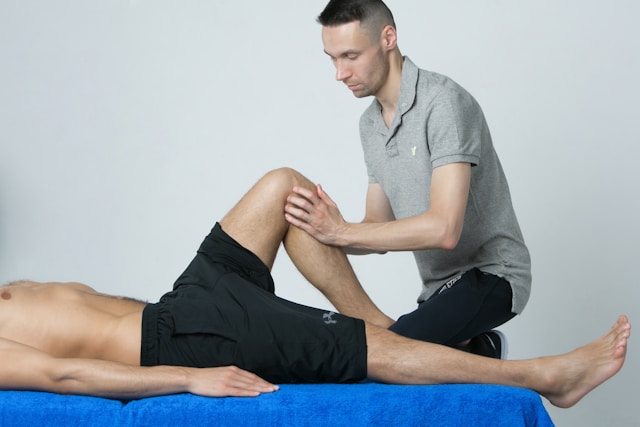
What the Difference Between Orthopedic and Sports Medicine Providers Means for Your Treatment
We can all imagine a situation when a joint injury stopped us in our tracks. A knee giving out while walking along a crowded street. The ache that sets in days after a long run that leaves you limping. The dread of standing up from rest when lower back pain creeps in and radiates down your legs.
You’re now at the stage where your primary care physician has already made the call that rest and a generic treatment plan aren’t going to cut it, and you’ve been referred to orthopedic and sports medicine specialists trained in musculoskeletal injury, degenerative disease, and surgical and non-surgical care across a wide range of conditions and lifestyles.
Here’s what to expect from the physician providers at our Las Vegas clinics if you’re curious about orthopedic vs. sports medicine treatment plans, when surgery is the best option, and how the choice between the two is personalized to you.
The Difference Between Orthopedic and Sports Medicine Treatments: Which Is Right For You?
Both orthopedic and sports medicine physician providers treat many of the same conditions, but how they approach treatment depends on the full picture. Of course the overall nature of the injury matters, but so does your daily activity level, your physical demands, and what you’re ultimately trying to get back to.
For example, the strain on someone living a more sedentary, low-impact lifestyle looks very different from someone active and on their feet for eight or more hours a day on a retail floor, a construction site, or a Las Vegas hospitality shift, and further different again from someone training competitively or putting in serious time at the gym. Thankfully, orthopedic and sports medicine providers account for all of it.
Both orthopedics treatment and sports medicine recovery plans draw from a shared set of treatment tools:
- Physical therapy
- Pain management
- Bracing
- Movement analysis
What are Orthopedics?
Orthopedic treatments address injuries, disorders, and degenerative diseases of the musculoskeletal system, covering everything from bones and joints to ligaments, tendons, muscles, and nerves. Treatment options are personalized to your particular needs, but could be framed around:
- Medication and bracing
- Arthroscopic and minimally invasive procedures
- Joint fusion
- Joint replacement
- Treatment for degenerative conditions like osteoarthritis and tendonitis
- Fracture rehabilitation
When to See an Orthopedic Doctor
If any of the following symptoms apply to you, it’s time to get evaluated:
- Pain that isn’t improving after rest and over-the-counter treatment
- Swelling that lingers or keeps returning around a joint
- A feeling of instability in a joint
- Limited range of motion affecting daily tasks
- Home care and OTC options are no longer effective
When To See An Orthopedic Surgeon?
Knowing when to see an orthopedic surgeon is generally when your condition requires surgical repair, ranging anywhere between a severe fracture, significant joint degeneration, or a case where non-surgical options haven’t moved the needle in alleviating any of your symptoms in a noticeable way. If your injury is significantly affecting your quality of life and the pain has you asking “when should I see an orthopedic surgeon?”, then a consultation is a reasonable next step, and sooner rather than later.
Commonly performed surgical procedures include:
- General orthopedics and fracture care
- Adult and pediatric care
- Treatment of sport injuries
- Minimally invasive surgery of the knee and shoulder
- Minimally invasive total knee arthroplasty and joint replacement
- Advanced arthroscopic reconstruction of the knee and shoulder
- Total shoulder replacement and arthroscopic rotator cuff repair
- Cartilage transplantation and meniscus transplants
What Is Sports Medicine?
Sports medicine physicians specialize in the non-surgical treatment and prevention of injuries related to physical activity. This methodology takes a non-surgical approach to treatment and usually goes beyond the injury itself and focuses more so on prevention and long-term recovery and incorporation of recovery within your already active lifestyle. That includes:
- Rehabilitation and movement analysis
- Injury prevention and performance optimization
- Nutrition and conditioning guidance
- Concussion management
Sports medicine is appropriate for a wide range of patients and activity levels, not only competitive athletes. That said, if any of the following sound familiar, working with a sports medicine specialist is a good place to start:
- A sprain, strain, or stress fracture that isn’t healing on its own and needs a structured, supervised recovery plan
- Pain that shows up consistently during or after exercise, weightlifting or engaging with your sport and isn’t improving with rest
- Chronic tightness or soreness that builds up over time from repetitive movement
- Difficulty moving through a full range of motion that’s affecting your training, performance, or daily activity
- Preventative care and guidance on how much your body can handle without breaking down, and how to train in a way that reduced injury risk over time
When you’re in pain, the last thing you need is confusion around sports medicine vs. orthopedics. Finding the right starting point makes all the difference in your recoveryAt AOSMLV, our board-certified and fellowship-trained physician providers work with clients throughout Las Vegas across both disciplines and are ready to find the right care plan for you. Contact us to get in touch.